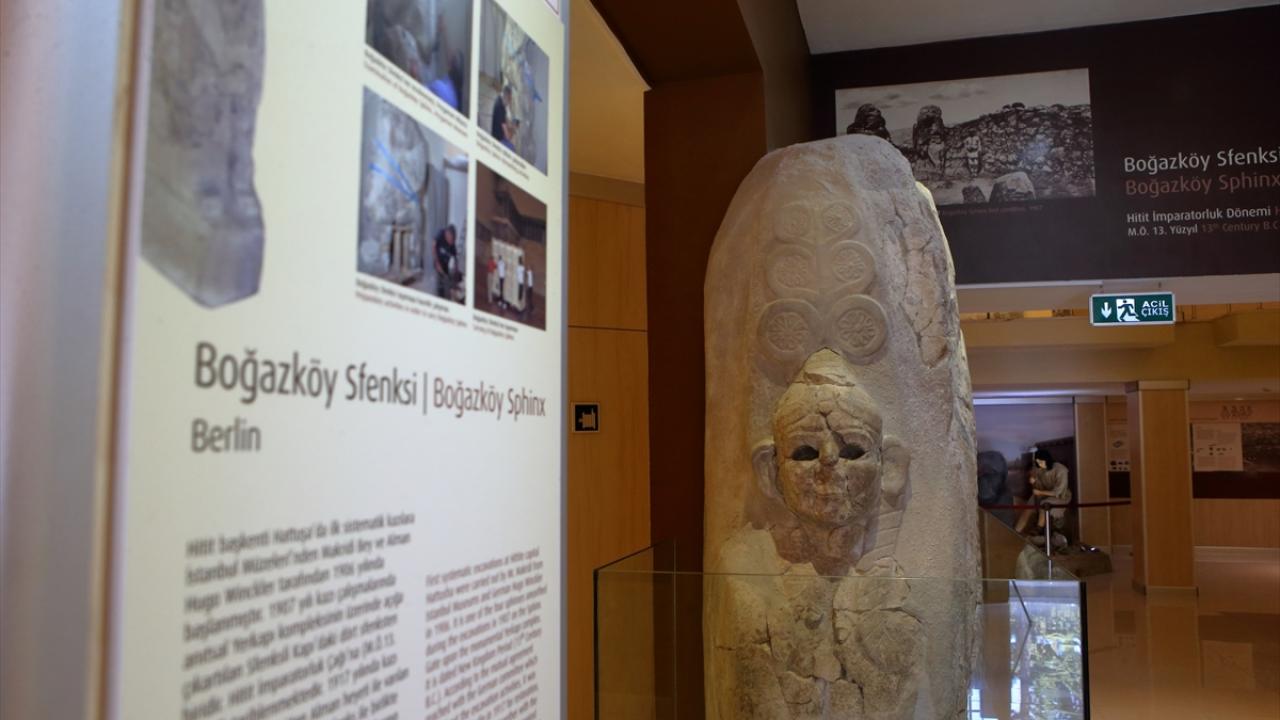
The Journey Home of the Boğazköy-Hattuşaş Sphinx
Year: 2011
Project Team: Ali Osman Avsar, A. Tarık Güçlütürk, Ugur Young
After 94 years of being exhibited at the Berlin Pergamon Museum, the Boğazköy-Hattuşaş Sphinx was finally repatriated to its homeland in 2011. This study documents the high-risk technical operation led by three Turkish specialists who managed the complex dismantling, transportation, and subsequent restoration of this 1,700 kg Hittite masterpiece.
Precision Dismantling: Unlike the German suggestion to dismantle the Sphinx into hundreds of small fragments, the Turkish team developed a unique method to detach the Sphinx from the museum wall as a single piece. Using controlled drilling and structural support systems, the artifact was safely separated from its 1950s-era brick-and-plaster reinforcement.
Advanced Packaging & Logistics: To ensure zero vibration during its flight from Berlin to Istanbul, a custom-designed wooden crate system was developed using AutoCAD. The Sphinx was encased in a protective barrier of polyurethane foam, following a meticulous isolation process.
Modern Restoration Techniques: Upon its arrival at the Istanbul Restoration and Conservation Laboratory, the Sphinx underwent a modern conservation process. The old brick interior was replaced with a lightweight yet superior support system made of carbon fiber and epoxy resin, reinforced with a stainless steel internal construction. Additionally, the majority of the laboratory staff contributed to the extensive process of creating a high-precision silicone mold of the twin Sphinx at the Istanbul Archaeological Museum.
A Symbolic Reunion: The project concluded on November 26, 2011, when the Sphinx was reunited with its twin at the Boğazkale Museum, marking a significant victory for the protection of global cultural heritage.
This operation serves as a testament to the expertise of Turkish conservators in handling large-scale, fragile archaeological monuments and remains one of the most successful repatriation stories in modern museology.
Gucturturk, A. T., Teen, The. and Avşar, A. O. (2013). “Bringing the Boğazköy-Hattusa Sphinx to Turkey and Conservation-Repair Studies”, (21. Müze Çalışmaları ve Kurtarma Kazıları Sempozyumu, 1-5 April 2012, Mugla/Marmaris), Publications of the General Directorate of Cultural Heritage and Museums, 131-149.
Proceedings
Informational Text


