Ridefinire il conservatore: Dai tecnici silenziosi ai narratori strategici
Diario: Giornale di studi umanistici e di ricerca turistica (2026, vol. 16, Problema 2, pp. 217-235)
Tipo di documento: Articolo di ricerca sottoposto a revisione paritaria
Pilastri fondamentali: Conservazione preventiva, Museologia Partecipativa, Sperimenta l'economia, Alfabetizzazione sul patrimonio
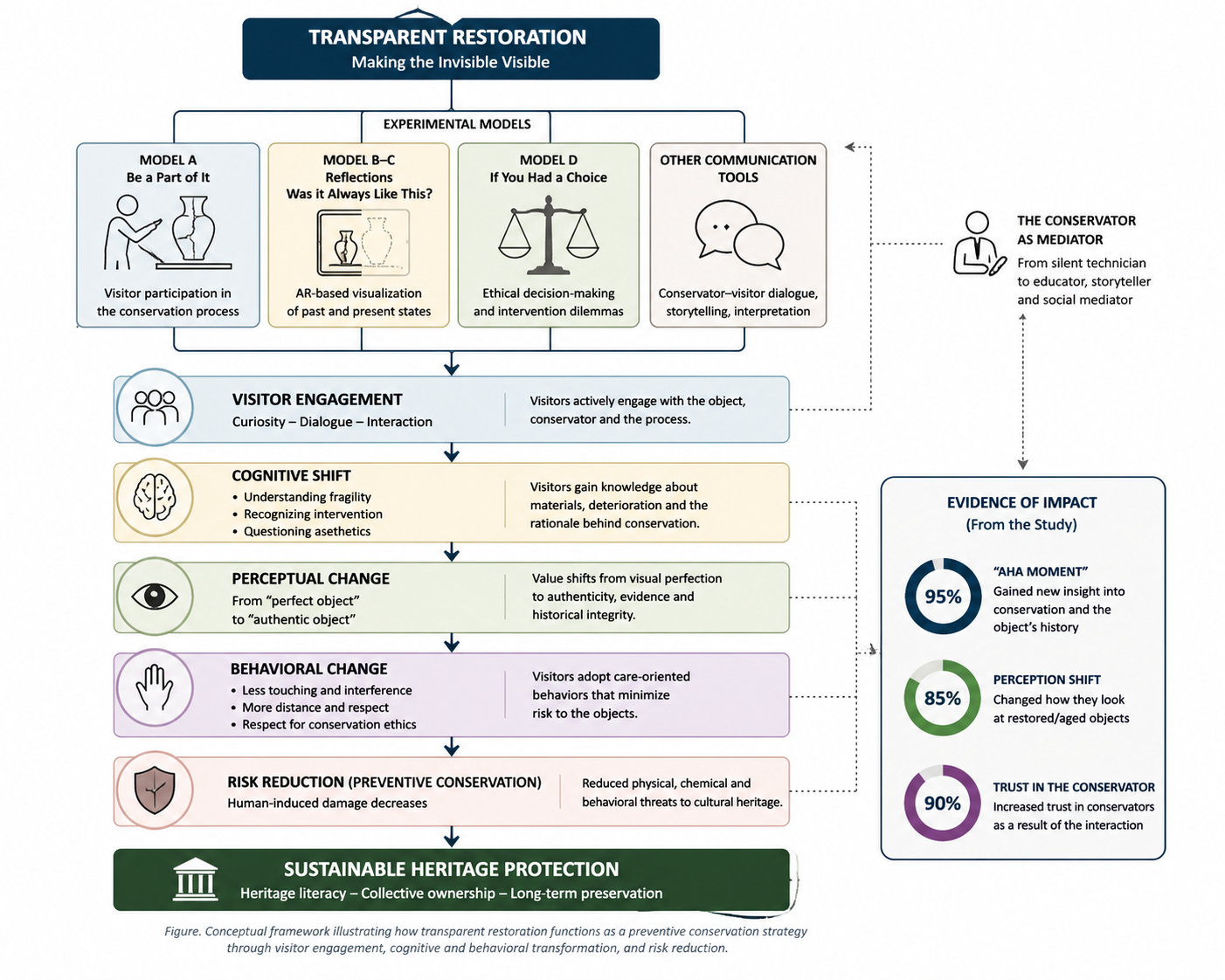
Per decenni, the traditional conservation-restoration workflow operated as an epistemic ‘black box’—a strictly micro-level, laboratory-bound technical service hidden entirely from the public gaze. This peer-reviewed study, published in the Giornale di studi umanistici e di ricerca turistica (2026), challenges this institutional orthodoxy by framing Transparent Restoration not merely as a communication exercise, but as a robust, proactive Preventive Conservation Strategy for global heritage sustainability.
By opening the laboratory doors and making the ‘in-process’ state of an artifact visible, we bridge the gap between elite expert knowledge and public perception. La ricerca valuta sistematicamente quattro modelli operativi che ho sviluppato e implementato:‘Fatene parte’ (Agenzia simbolica), “Riflessioni” (Integrazione AR in tempo reale), «È sempre stato così?»?’ (Mappatura del decadimento cronologico), e il quadro etico guidato dalla scelta "Se potessi scegliere". I dati empirici rivelano che la messa in scena dei dilemmi etici e delle biografie materiali dei beni culturali innesca un cambiamento cognitivo permanente nei visitatori, trasformare i consumatori passivi in attivi, custodi alfabetizzati della memoria collettiva.”
Punti salienti & Empirical Insights
The Shift from Micro to Macro: Elevating structural material science (micro) into a macroeconomic tool for sustainable tourism, experience economy, and public cultural policy.
95% “Aha Moment” Vector: Quantitative analysis confirms that visual and tactical interaction fundamentally shifts the public’s perception of authenticity away from cosmetic perfection toward historical truth.
Weapon Against Disneyfication: Grounded firmly in Cesare Brandi’s classical doctrine, the models use direct transparency (such as the proposed ‘Ethical Barcode’ E ‘UV Light Testing’) to immunize cultural institutions against superficial commercialization.
Operational Inventions: Introducing the concept of the ‘Strategic Conservation Communicator’ to seamlessly balance high-impact public mediation sessions with active laboratory workloads.
The public awareness and visibility models presented in this article were officially evaluated by the London-based IIC Committee and selected for the Finalist Shortlist of the prestigious 2026 Keck Award for their visionary philosophy.