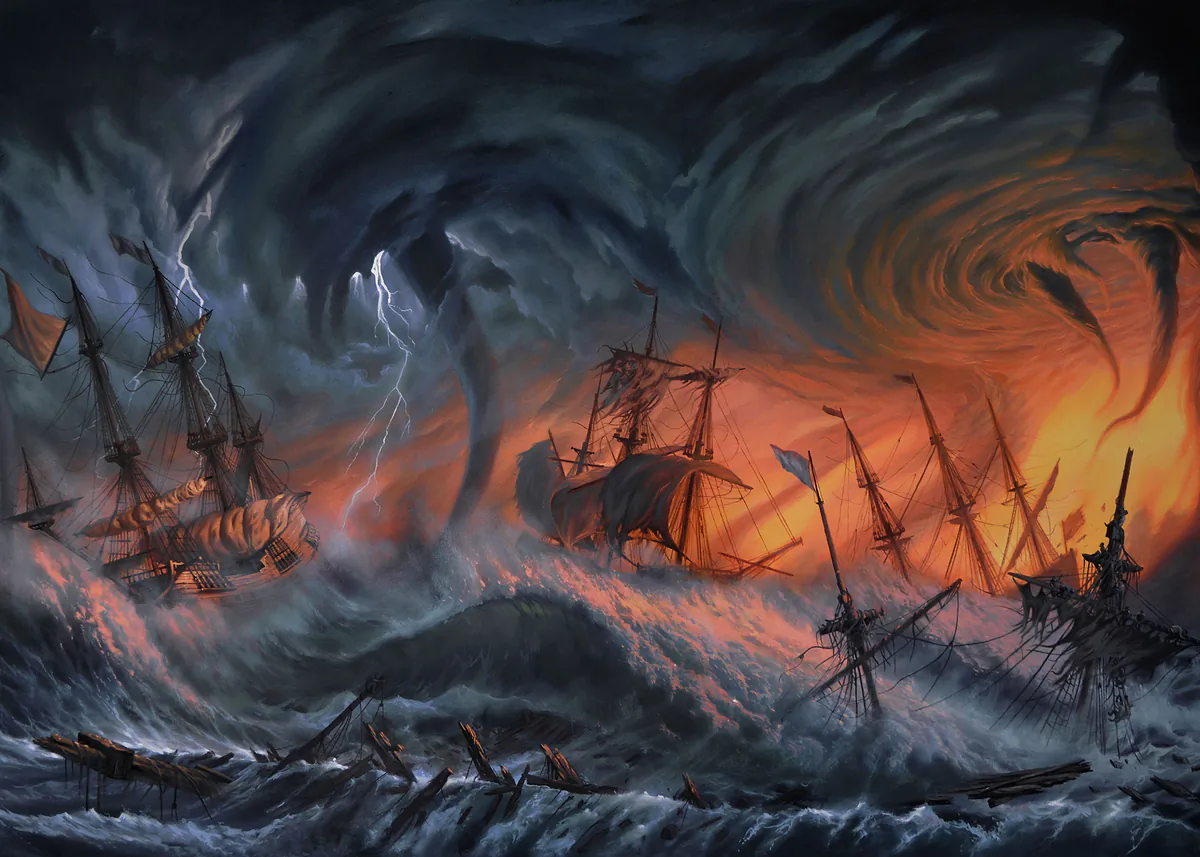
Explanation of the Metaphor (The Metaphor): In maritime terms, a “Perfect Storm” refers to a rare convergence of distinct meteorological hazards that strike simultaneously and in the same location, creating a monumental hurricane far more destructive than its individual components. For cultural heritage, the scenario is identical. The deterioration of an artifact is rarely caused by a single isolated event. The synergetic convergence of moisture, sudden temperature fluctuations, light radiation, pollution, and human neglect unleashes an unstoppable wave of destruction upon the material—”The Perfect Storm.”
The Conservation Angle: In conservation science, this metaphor illuminates the cumulative, synergetic impact of degradation agents. For instance, high humidity alone can warp timber. However, when combined with elevated temperatures and stagnant air, it creates the ultimate breeding ground for microbiological growth. Preventive conservation is the art of optimizing microclimatic conditions before the storm hits, ensuring that atmospheric elements never achieve this fatal alignment.
Case Study
Wall Paintings (Frescoes) in Underground Cisterns and Damp Caves: In these enclosed microclimates, high relative humidity mobilizes soluble salts within the rock structure. The carbon dioxide (CO2) exhaled by tourists and the heat generated by artificial lighting are introduced to this fragile matrix. When moisture, salt crystallization, CO2, and heat collide on the fresco surface, a “Perfect Storm” erupts; the paint layer entirely loses its binding capacity, flaking away rapidly and causing irreversible heritage loss.
Expert Takeaway
“The conservator must not be a captain trying to salvage a ship after the storm has broken, but rather a climate architect who monitors cloud formations to prevent the storm from gathering in the first place.”
Explanation of Metaphor (The Metaphor)
in maritime “The Perfect Storm”, different meteorological negativities rarely intersect at the same time and in the same place, It means that it turns into a gigantic hurricane that is much more destructive than what they could create on their own.. The situation is no different for cultural assets.. The destruction of a work is rarely due to a single cause. Not, sudden temperature fluctuations, light radiation, A synergistic combination of factors such as air pollution and human neglect, an unstoppable wave of destruction on the material, well “The Perfect Storm”starts the.
Konservasyon Bakışı
In conservation science, this metaphor, joint decomposition factors (synergistic) Allows us to understand the impact. For example, high humidity alone can damage wood; but humidity, combined with high temperature and insufficient air circulation creates a perfect breeding environment for microorganisms. Preventive conservation, This is the art of preventing atmospheric components from forming a deadly combination by optimizing microclimatic conditions before the storm breaks..
Case Analysis
Murals in Underground Cisterns and Humid Caves (Freskler):
High relative humidity in these microclimates, mobilizes soluble salts in the rock structure. Carbon dioxide released into the environment due to tourism activities (CO2) and the heat created by artificial lighting is added to this process. Not, salt crystallization, When CO2 and heat are simultaneously loaded onto the fresco surface “The Perfect Storm” copper; The paint layer completely loses its binding and flakes rapidly, resulting in an irreversible loss..
High relative humidity in these microclimates, mobilizes soluble salts in the rock structure. Carbon dioxide released into the environment due to tourism activities (CO2) and the heat created by artificial lighting is added to this process. Not, salt crystallization, When CO2 and heat are simultaneously loaded onto the fresco surface “The Perfect Storm” copper; The paint layer completely loses its binding and flakes rapidly, resulting in an irreversible loss..
Expert Inference
“Conservator, Not a captain trying to save the ship after a storm broke out; There must be a climate architect who prevents storms from occurring by monitoring the movement of clouds.”