Contesto: Presentato al III. METU Archaeometry Workshop: Metal in Turkish Archaeology (2013).
The Vision: Bridging the Gap Between Laboratory Resources and Scientific Inquiry.
This comprehensive study serves as a professional “roadmap” for the integration of archaeometric techniques into the conservation-restoration workflow of historical metals. Presented at the prestigious METU Archaeometry Workshop, the paper highlights a fundamental philosophy: A conservator’s success is defined not by the equipment in their own laboratory, but by their ability to coordinate interdisciplinary collaborations to achieve the “true diagnosis” of an artifact.
Surface & Structural Diagnostics: The application of Magnetic Particle Inspection on the Golden Horn Chains revealed invisible surface cracks, while Ultrasonic Testing decoded the complex multi-layered forging of ancient spearheads.
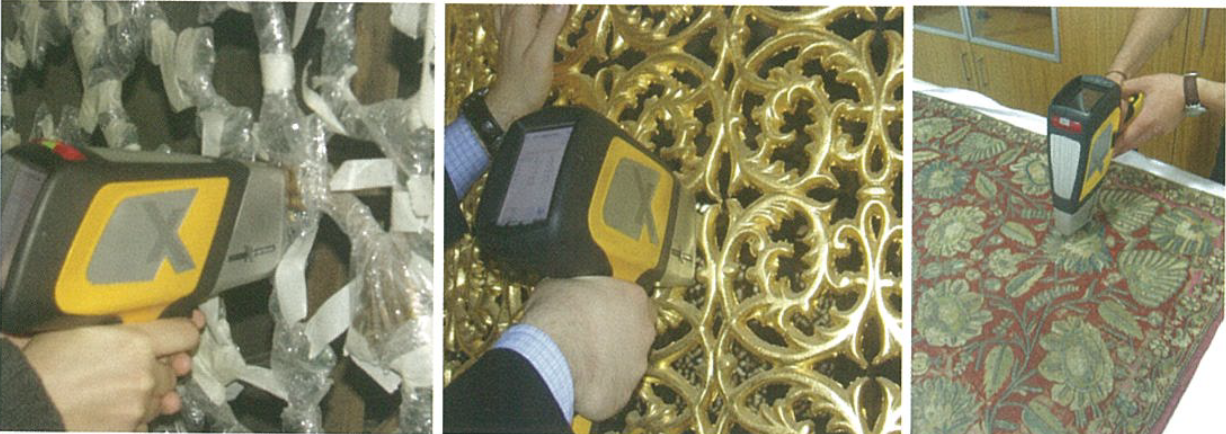
Elemental Fingerprinting: Through WD-XRF, ICP-MS, and Portable XRF (P-XRF), the research demonstrates how chemical characterization guides the selection of the correct conservation chemicals for artifacts ranging from Byzantine coins to the architectural metals of Hagia Sophia.
Pioneering Digital Reconstruction: The study details the groundbreaking “Approccio olistico” for the Yenikapı anchors, where 3D Laser Scanning and 5-Axis CNC Machining were used to create high-fidelity replicas, restoring the artifact’s lost production volume for educational display.
By orchestrating a network of collaborations with institutions like TAEK and the Turkish Cultural Foundation, this work proves that archaeometry is an indispensable supporter of conservation. It redefines the conservator as an Archaeometric Coordinator, ensuring that every restoration is based on empirical data rather than assumptions.
giovane, il. (2013). “Studi di restauro e conservazione dei metalli storici alla luce degli studi archeometrici”, Türkiye Arkeolojisinde Metal: Arkeolojik ve Arkeometrik Çalışmalar, III. METU Laboratorio di Archeometria, 4-5 Ekim, Ankara, 229-238.