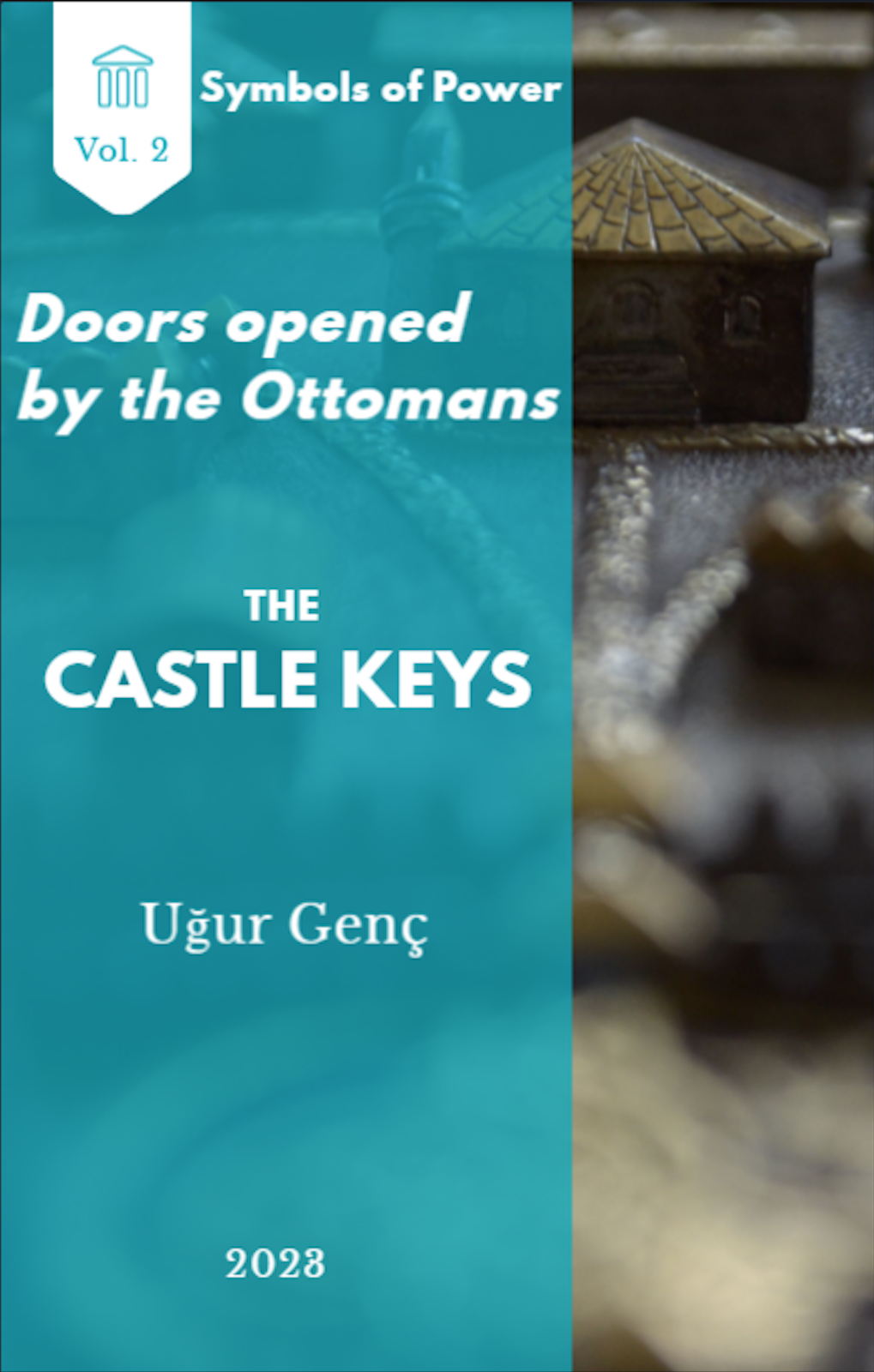
Cartography in Silver and Gold: Unlocking the Urban Identities and Geopolitical Might of the Ottoman Empire through Castle Keys
(Gümüş ve Altında Kartografya: Osmanlı İmparatorluğu’nun Kentsel Kimlikleri ve Jeopolitik Gücünün Kale Anahtarlarıyla Çözümlenmesi)
Book Title: Doors Opened by the Ottomans: The Castle Keys
Series: Symbols of Power Series, Vol. 2
Photographs: Çağlar ERDOĞAN
ISBN: 978-605-06741-4-9
Publisher & Designer: Uğur Genç
Format: Open-Access Electronic Book (e-Book)
Year: September 2023
The Topographic Breakthrough: Proving that the gold-plated relief work on the handles functions as precise architectural city plans of the period, allowing modern researchers to walk the historical streets of the strongholds virtually.
The Danube Border Audits: Documenting the 7 verified silver keys (including Ruse, Silistra, Feth-ül İslam, and Harşova) engineered under Mahmud II to counter 19th-century geostrategic threats.
Unlocking the Global Network: Inviting international experts specializing in siege architecture to utilize these precise macro-photographs to solve the provenance riddle of the 9 remaining unknown keys.
Cross-Institutional Synchronization: Fulfilling a historic gap by unifying the disjointed data registries between the Topkapı Palace and Harbiye Military Museum inventories, which successfully led to the discovery of original matching key boxes.
Most of these keys contain actual city plans. They are full of such fine workmanship and detailed elements that it would be possible to visit the streets if one could step inside the geometry of the key.