Status: Originally presented as a symposium paper; subsequently published as a comprehensive peer-reviewed article.
Abstract:
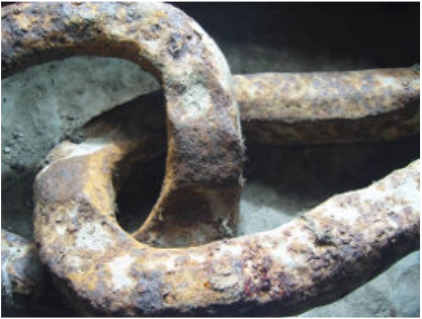
Istanbul was surrounded by the city walls in Eastern Roman Empire Period. The land side were builded with double walls and there was ditches next to these walls. There was also five kilometers long walls along the Golden Horn. The Golden Horn is essentially a creek in İstanbul. According to the Greek Mytology, Megara‟s People called this creek as Golden Horn in honor of Keroessa, who was the mother of their King. The walls along the seaside were builded to protect the city against the attacks of navy. The entrance of the warships into the Golden Horn was prevented by the chains ranging from the city to the north-east part of Galata Tower. The Byzantine‟s closed the entrance of the Golden Horn with the chain to enhance the defence of the İstanbul against the attacks of enemies. The rest of few hundred meters of the chain is preserved novadays in Military Museum, Navy Museum, Rumeli Hisari Museum and Archaeology Museum of İstanbul. Each ring of the chain is about half meter long and 20 cm thick, reckangle and S shaped forged iron parts. These chain, which was streched in the entrance of the Golden Horn during surrounding of İstanbul, is a very important finding to clarify the history. Physical investigations on the chains (shape, size,etc.) proved that all the individual parts were belonging to the same whole. Element analysis are required to verify these results with the scientific data. This study aims to carry out the analysis of the chains in various museums of Istanbul with respect to the element compositions. The results of the analyses will give information about the parts of the chain, whether they are original parts of the whole.
Genç, U., Başsarı, A. Acarkan, S., Kaygun, A. K. and Ekinci, Ş. (2010). “Investigation of Metal Compositions of Golden Horn’s Chains” [Abstract], 2nd Balkan Symposium on Archaeometry, 15-17 Eylül, İstanbul Kültür University, İstanbul, 65.
First presented at the 2nd Balkan Symposium on Archaeometry (2010). Revised and published as a full-length article in the following years.

